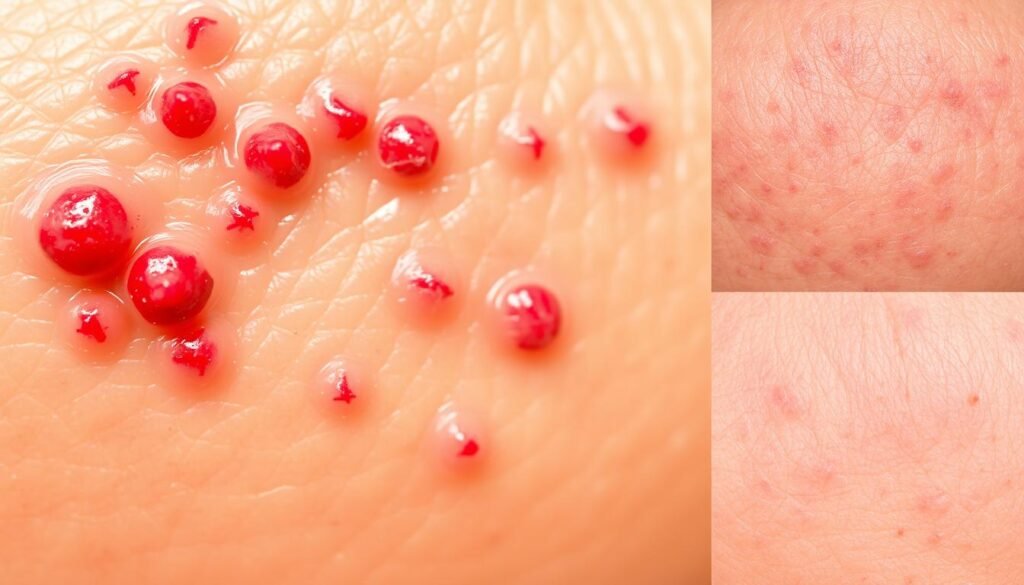
Skin Health

Gram-Negative Folliculitis

Gram-Negative Folliculitis: What It Is and How to Treat It

About 80% of people with gram-negative folliculitis have superficial pustular lesions. They don’t have comedones. This type of skin infection often goes unnoticed, particularly in those who have taken antibiotics for a long time. Gram-negative folliculitis, identified in 1968, can get worse with rosacea. Therefore, it’s crucial to understand this condition to treat skin infections

Gram-Negative Folliculitis: What It Is and How to Treat It Read More »

Differentiating Folliculitis

Differentiating Folliculitis: How to Identify It from Other Skin Conditions

About half of all dermatology visits are because of skin issues like folliculitis. This fact highlights how key it is to correctly identify folliculitis for effective treatment. Knowing how to tell folliculitis apart from other skin conditions is critical. Wrong diagnoses can lead to the wrong treatments, making things worse for patients. This article sheds

Differentiating Folliculitis: How to Identify It from Other Skin Conditions Read More »

Recognizing Folliculitis

Recognizing Folliculitis: Symptoms and How It’s Diagnosed

Did you know that over 20% of people will experience folliculitis at some point? This condition causes inflammation of hair follicles. This leads to noticeable discomfort. Recognizing folliculitis early is crucial for effective management. Without treatment, it can worsen and affect skin health. This article will help you understand the symptoms of folliculitis. It also

Recognizing Folliculitis: Symptoms and How It’s Diagnosed Read More »

Scroll to Top